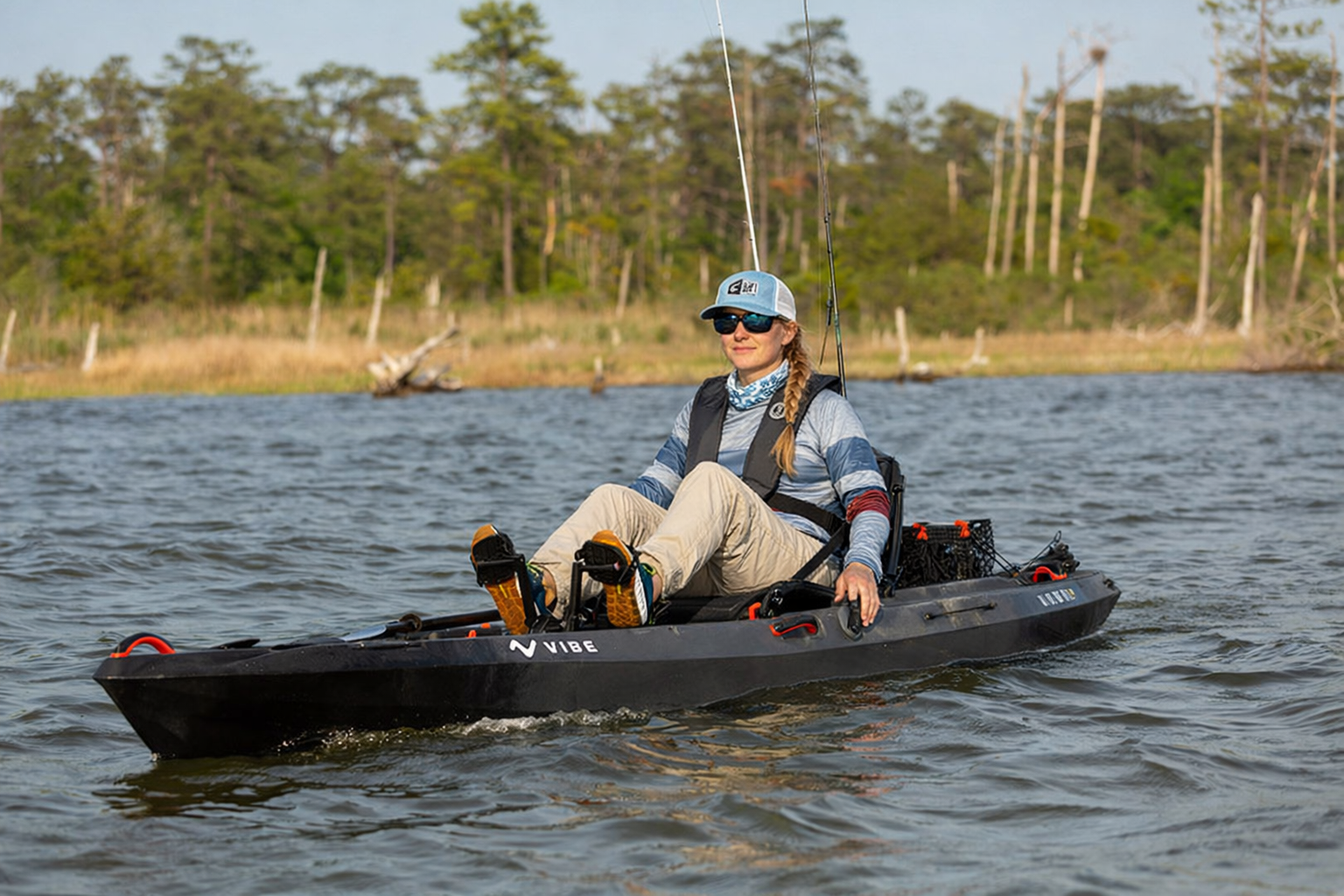
Best Fishing Kayaks for Freshwater Rivers
(Stability & Maneuverability)
Fishing rivers from a kayak presents unique challenges. Fast-moving current, tight bends, shallow water, and submerged obstacles demand a kayak that’s stable, responsive, and easy to control. Many anglers buy wide, heavy lake kayaks only to find them difficult to manoeuvre in flowing water.
River fishing is a game of fluid dynamics. Unlike lakes, where you hunt for fish, rivers use the current as a conveyor belt to bring food to them. Success requires “reading the water” to find seams and eddies—pockets of calm water where predators wait to ambush prey.
The good news? There are fishing kayaks designed specifically to handle freshwater rivers, offering the right balance of stability, agility, and control—without sacrificing comfort or fishability.
Quick recommendation (top pick)
It strikes the best balance of maneuverability, stability, and durability for river anglers, making it ideal for both beginners and experienced fishers.
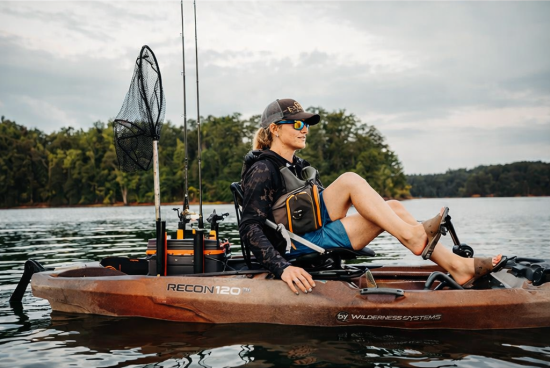
👉 Best Overall for Rivers: Wilderness Systems Recon 120
Quick Picks
| Kayak | Best For | Length | Weight | Key Strength |
|---|---|---|---|---|
| Vibe Yellowfin 100 | Budget/Small Rivers | 10 ft | ~51 lb | Lightweight & agile |
| Wilderness Systems Recon 120 | All-round river fishing | 12 ft | ~95 lb | Stabillity + Control |
| Hobie Mirage Passport 10.5 | Premium/current control | 10.5 ft | ~73lb | Hands-free propulsion |
Product Details
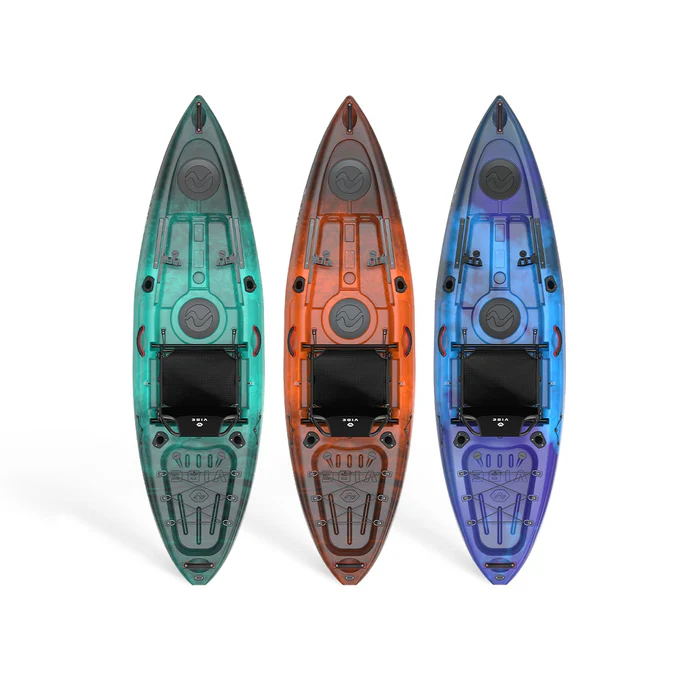
🟢 Budget Pick: Vibe Yellowfin 100
Pros
- Lightweight and easy to transport
- Shorter length improves turning in current
- Stable hull for stand-up casting in calm sections
- Excellent value for money
Cons
- Limited storage for long trips
- Paddle-only (no pedal drive)
- Not ideal for very fast or technical water
Best For
- Beginners, smaller rivers, tight waterways
Why it works on rivers:
Its compact size and lighter hull make it easier to control in narrow channels and shallow runs, especially for anglers just getting started.
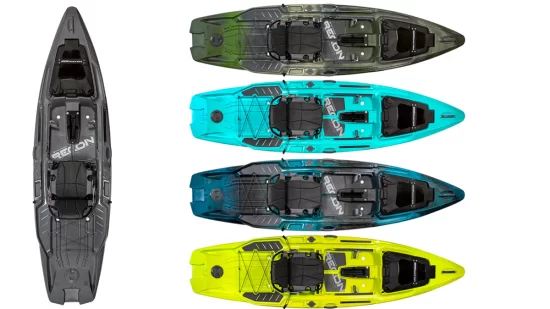
🔵 Mid-Range Pick: Wilderness Systems Recon 120
Pros
Cons
- Extremely stable hull design
- Tracks well while still turning predictably
- High weight capacity for gear-heavy trips
- Built tough for rock strikes and shallow launches
- Heavier than entry-level kayaks
- Requires roof racks or trailer for transport
Best For
- Serious river anglers, mixed conditions
Why it works on rivers:
The Recon 120 handles current confidently while offering the stability needed for standing casts and landing fish in moving water.
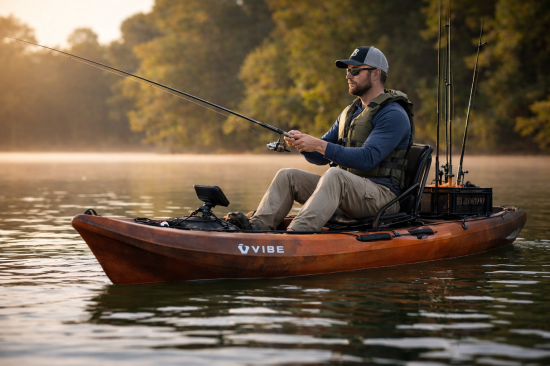
🟣 Premium Pick: Hobie Mirage Passport 10.5
Pros
Cons
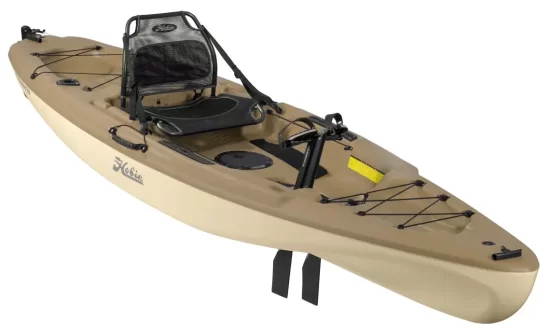
- Pedal drive allows hands-free control
- Easy to hold position in current
- Highly manoeuvrable in tight water
- Comfortable seating for long sessions
- Higher price point
- Pedal drive requires clearance in shallow sections
- Heavier than paddle-only kayaks
Best For
- Serious river anglers, mixed conditions
Why it works on rivers:
Pedal propulsion gives you a major advantage in flowing water—allowing you to fish structure, seams, and eddies without constantly paddling.
Why River Fishing Kayaks Are Different from Lake Kayaks
The environment dictates your hull design.
Moving Water: Prioritise maneuverability. A shorter kayak with a “rocker” (curved hull) allows for quick pivots around obstacles.
Open Water: Prioritise tracking and speed. Longer, narrower hulls cut through wind and chop more efficiently.
Depth: Use paddle kayaks for “skinny” water to avoid damaging drives, while pedal drives are superior for holding position against heavy wind or tide.
To an experienced angler, a kayak is more than just a boat—it is a specialised fishing platform where “fishability” outweighs aesthetics. Pros prioritise secondary stability, valuing a hull that remains predictable on its edge in rough water rather than one that just feels “stiff” at the dock.
They demand a clean deck layout, knowing that every protruding bolt or poorly placed handle is a potential snag point during a critical fight.
Buyer’s guide: What to look for in a river fishing kayak
1. Length & manoeuvrability
- 9.5–12 ft is ideal for rivers
- Shorter kayaks turn faster but track less
- Longer kayaks track better but need more space
2. Stability
Look for:
- Pontoon or tunnel-style hulls
- Wide standing platforms
- Low centre of gravity seating
3. Weight & durability
River kayaks take hits. Choose:
- Thick rotomoulded polyethylene
- Reinforced keel protection
- Reasonable weight for portaging
4. Propulsion type
- Paddle kayaks: simpler, lighter, better for shallow rivers
- Pedal kayaks: better control in current, higher cost
FAQs
Can I use a lake kayak on a river?
Yes, but it’s not ideal. Lake kayaks are often wider, heavier, and harder to control in moving water. See our post on Lake Kayaks here
Are pedal kayaks safe in rivers?
Yes, in moderate current—but always check water depth and be prepared to pull the drive in shallow sections.
What length kayak is best for rivers?
Most anglers prefer 10–12 ft for a balance of control and stability.
Final Verdict
If you want the best all-around freshwater fishing kayak, take a look at the Vibe Sea Ghost 130. Budget anglers should look more into the Yellowfin 100, while serious anglers will love the Shearwater 125.